The Ultimate Guide to Filipino Culture: Traditions, Values & Customs You Should Know

Disclosure: This post contains affiliate links. If you purchase through them, I may earn a small commission—at no extra cost to you. Salamat (Thank you)!
Introduction
Growing up in the Philippines, my days were filled with warmth, laughter, and long, “kwentuhan” or heartfelt conversations—the kind that stretched late into the night with family and friends. Filipino culture wasn’t just around me—it was me. It’s in the way we say “Kain tayo!” or “Let’s eat!” to everyone, even strangers, how we treat guests like long-lost relatives, and how we always find a reason to smile through life’s everyday chaos—brownouts, floods, and all.
You may be planning your first trip to the Philippines, diving into your Filipino roots, or just wondering how we manage to smile through everything (yes, even Metro Manila traffic). Whatever brought you here, you’re about to get a closer look at what makes Filipino culture so beautifully unique—and why it sticks with you, no matter where in the world you are.

Want to connect with Filipino culture truly?
Grab this beautifully designed PDF packed with cultural tips, Tagalog words, and the heartwarming traditions we’re known for.
Sign up with your email here to download instantly!
Core Filipino Values: Family, Respect, and Harmony
Family Is Everything
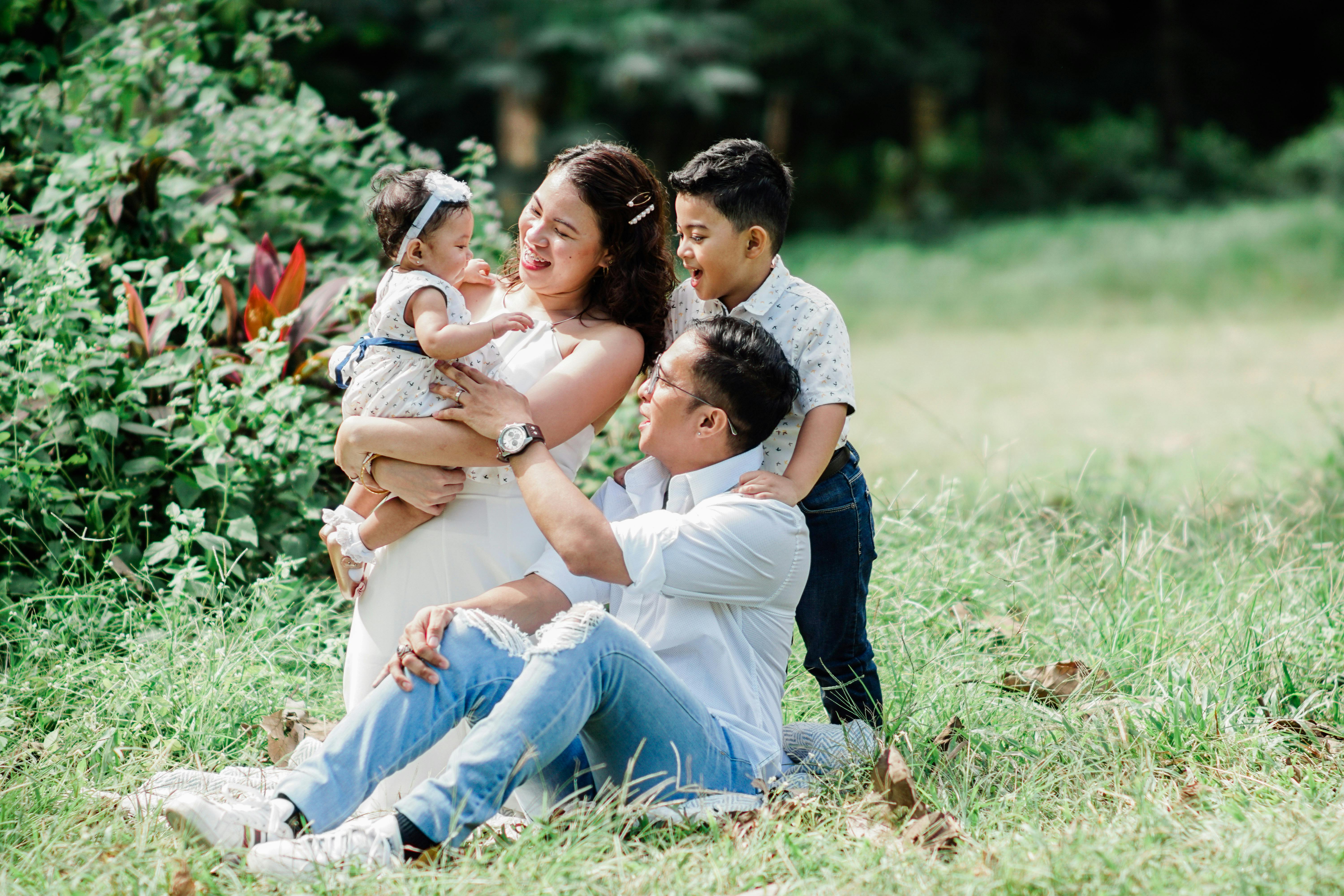
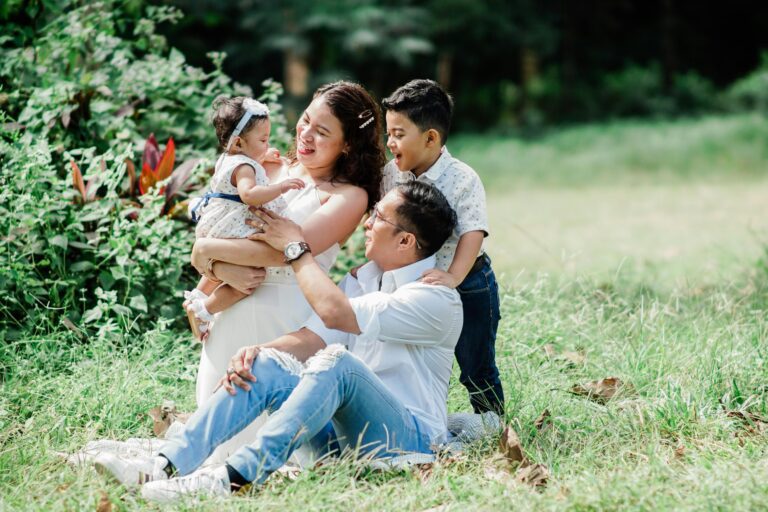
Family is the heart of Filipino culture—it’s where everything begins and stays rooted. In the Philippines, it’s common for extended families—including grandparents, aunts, uncles, and cousins—to live together or nearby. Even close family friends are often considered part of the family, showing just how deeply Filipino family values are woven into daily life.
Growing up in the Bicol region, I have fond memories of visiting my grandparents. We’d laugh and prepare traditional Filipino dishes like Laing (dried taro leaves cooked in coconut milk and shrimp paste), Pinangat (taro leaves stuffed with young coconut, shrimp, and meat, cooked in coconut milk), and Sinukmane (a local sticky rice cake). Food and family always went hand in hand.
On my dad’s side, our yearly Christmas family reunions were a big event. My cousins and I would show off new clothes and shoes from Christmas Eve and eagerly receive cash gifts from our ninongs (godfathers) and ninangs (godmothers). But more than gifts, I saw how family becomes a support system. Whenever one of my dad’s ten siblings faced hardship, they would come together, talking, planning, and making sure no one was left behind.
These experiences continue to shape my understanding of what makes Filipino culture so unique: a strong sense of togetherness, resilience, and love that starts with family.
These experiences continue to shape my understanding of what makes Filipino culture so unique: a strong sense of togetherness, resilience, and love that starts with family. 👉 Read more about why family is everything in Filipino culture.
Respect for Elders
Note: This section contains affiliate links. If you purchase through them, I may earn a small commission—at no extra cost to you. Salamat (Thank you)!
Respecting elders is deeply ingrained in everyday Filipino life, from the way we speak to the way we greet them. From childhood, we’re taught to use respectful titles like “Tito” (Uncle), “Tita” (Aunt), “Lolo” (Grandfather), “Lola” (Grandmother), “Ate” (older sister), and “Kuya” (older brother) when addressing older relatives or even close family friends. These terms aren’t just names—they reflect how much we value age, wisdom, and family hierarchy.
But this deep respect doesn’t stop at home. Filipinos naturally extend it to teachers, community elders, and even strangers. A simple “po” or “opo” in conversation instantly signals humility and reverence. And one of the most iconic gestures of Filipino respect is mano po: gently taking an elder’s hand and bringing it to your forehead as a sign of honor. For families wanting to teach these traditions to kids in a fun and relatable way, the book Salamat Po: Learning and Showing Filipino Respect is a wonderful resource.
This strong emphasis on honoring elders is one of the most beautiful aspects of Filipino family values. It’s a tradition that bridges generations—and continues to shape how we interact, connect, and carry our culture forward.
A Heartfelt Tribute to Lola
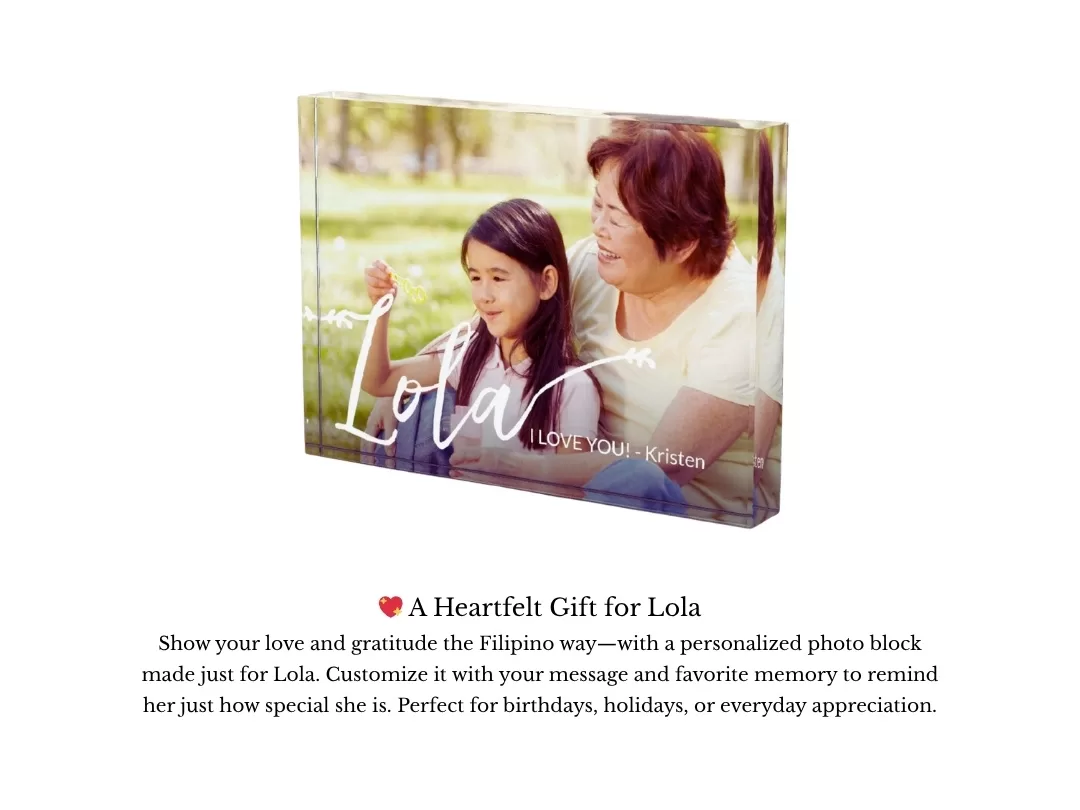
Looking for a simple way to show your love for Lola (grandmother) or Lolo (grandfather)? This custom photo block from Zazzle lets you add a personal message and photo—perfect for birthdays, holidays, or just because.
It’s a beautiful reminder of the deep bond between grandparents and grandchildren.
👉 Customize yours here and make Lola smile today.
Bayanihan
Filipinos are admired around the world for their resilience—the strength to rise above typhoons, financial struggles, and even political storms with hope and a smile. At the heart of that resilience is bayanihan, the Filipino spirit of communal unity and helping one another without expecting anything in return.
Traditionally, bayanihan referred to neighbors literally helping move a house—an actual bahay kubo (nipa hut)—by lifting it with bamboo poles and carrying it to a new location. These days, that same spirit lives on whenever communities come together after a typhoon, sharing food, rebuilding homes, and offering shelter.
You’ll also see bayanihan in everyday family life. When someone loses a loved one, neighbors and friends show up—not just to express sympathy, but to help cook, clean, and assist with funeral preparations. It’s an unspoken promise in Filipino culture: no one faces hardship alone. When one person stumbles, the whole community moves—as one—to help them rise again.
Did you know the Philippines celebrates Christmas from September all the way to January — the longest holiday season in the world? 🎄 Discover why in my blogpost:15 Filipino Christmas Traditions That Make the Holidays Unforgettable
Hiya (Shame/Modesty)
Harmony is everything in Filipino relationships—and it often shows in the quiet power of hiya and pakikisama. It reflects the desire to maintain peace, avoid confrontation, and show social sensitivity. You might notice Filipinos say “yes” even when they don’t completely agree—often to avoid conflict or hurt feelings. It’s not about being dishonest; it’s about preserving smooth, respectful relationships.
Closely tied to this is the concept of hiya (a sense of shame, modesty, or self-restraint). Rooted in the desire to protect one’s dignity and avoid causing embarrassment—especially to one’s family—hiya encourages thoughtful, respectful behavior. It often influences how people behave in public, speak in group settings, or handle difficult situations.
Together, pakikisama and hiya shape the Filipino way of communicating—with kindness, tact, and emotional intelligence. These values may seem subtle, but they’re powerful forces behind how Filipinos build trust, maintain relationships, and navigate everyday life with grace.
Utang na Loob (Debt of Gratitude)
Utang na loob—literally “a debt from within”—is one of the most deeply rooted Filipino values. It’s more than just being thankful; it’s a heartfelt sense of loyalty and gratitude toward someone who’s shown up for you—maybe a parent who worked extra jobs to send you to school or a friend who helped you when things got tough.
What makes utang na loob special is that it’s not about obligation or keeping score. It’s not a calculated favor—it’s a lasting bond built on trust, love, and appreciation. When someone helps you in a big way, you carry that with you, often finding ways to give back, support them later on, or pass that kindness along to someone else.
You’ll often see this value in action among families and close-knit communities. It’s a quiet promise that says, “I remember what you did, and I’m here for you too.” And that kind of loyalty? That’s the soul of Filipino gratitude.
Kapwa (Shared Identity)
Kapwa is one of the most beautiful and uniquely Filipino concepts—and honestly, it’s a little hard to translate perfectly. It roughly means “shared identity” or “fellow human,” but it goes deeper than that. Kapwa is the idea that we’re all connected. That your joy is my joy, your struggle is my struggle.
This value is evident in everyday Filipino life in numerous ways. It’s the reason strangers call each other kapatid (sibling), ate (older sister), or kuya (older brother)—even if they’ve never met before. It’s why we treat guests like family, and why community matters so much to us. Helping others isn’t just kindness—it’s a reflection of ourselves.
To live with kapwa is to recognize that we don’t exist in isolation. Our choices, our words, our actions—they ripple through the people around us. And that deep sense of interconnectedness? That’s what gives Filipino culture its big heart.
Traditions and Celebrations: Faith, Fiestas, and Filipino Joy
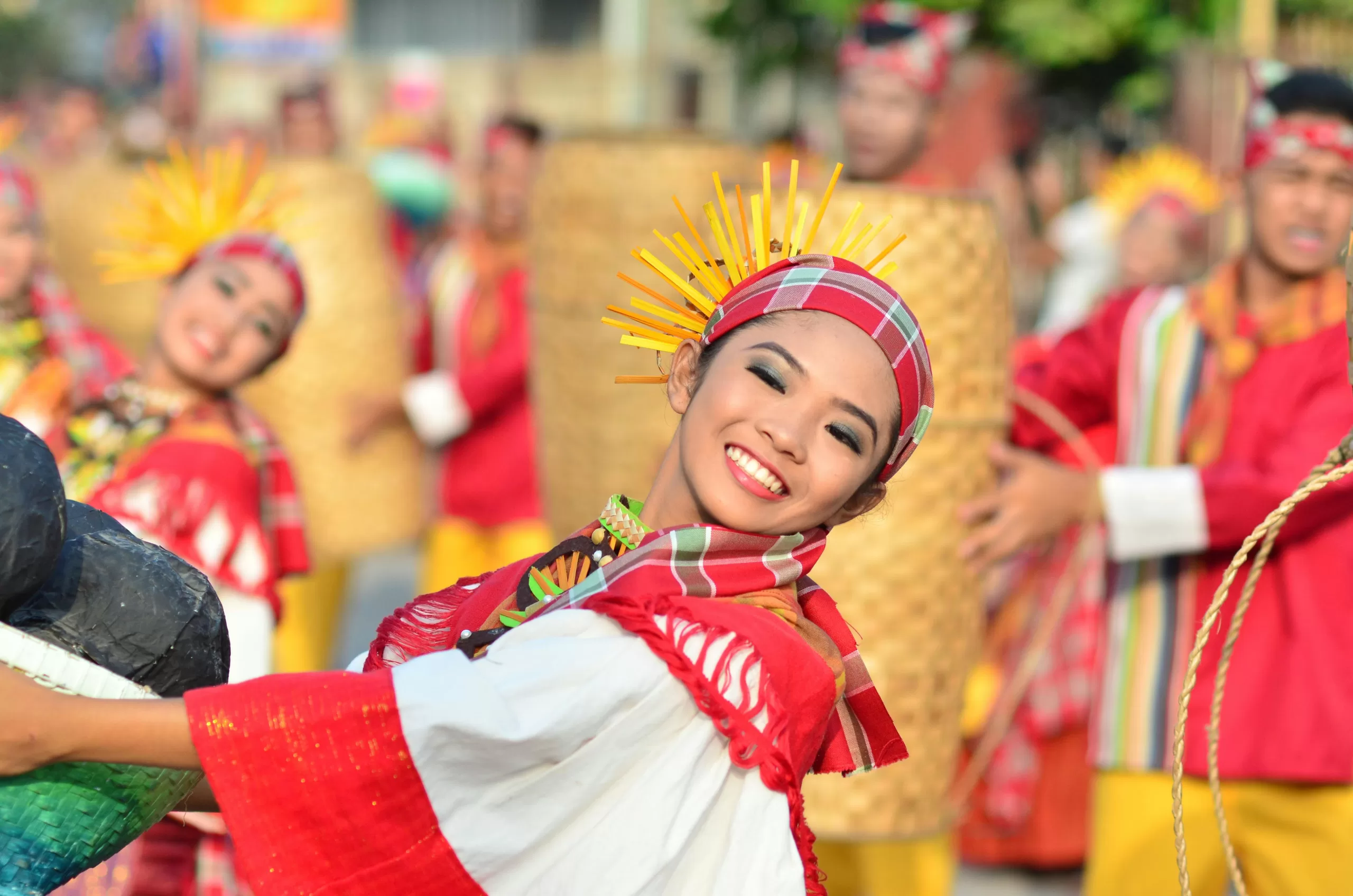
In the Philippines, fiestas aren’t just festive events—they’re vibrant expressions of faith, heritage, and community spirit. Whether you’re from the neighborhood or a curious visitor, expect to be welcomed with music, dancing, and open arms.
Most fiestas are held in honor of patron saints, reflecting the deep influence of Catholicism in Filipino traditions. Streets come alive with colorful parades, performances, and displays of devotion. Below are some of the most well-known celebrations across the country—each offering a unique glimpse into the heart of Filipino culture.
Ati-Atihan Festival (Kalibo, Aklan)
- When: January
- Description: Known as the ‘Mother of All Philippine Festivals,’ Ati-Atihan is a week-long celebration in honor of the Santo Niño (Holy Child). The festival’s name, ‘Ati-Atihan,’ originates from the Aklanon word ‘ati,’ meaning ‘to be like’ or ‘to pretend.’ Participants adorn their faces with black soot and don intricate costumes while swaying to rhythmic drumbeats in the streets. The event features street dancing, processions, and parades, blending indigenous customs with Catholic traditions.
Sinulog Festival (Cebu City, Cebu)
- When: January
- Description: The Sinulog is a spectacular event that pays tribute to Santo Niño. It showcases a lively procession through the streets, where people adorned in bright outfits dance to the rhythm of drums, trumpets, and Indigenous gongs. The dance imitates the flow of water, signifying the embrace of Catholicism in the Philippines.
Panagbenga Festival (Baguio City, Benguet)
- When: February
- Description: Also known as the “Flower Festival,” Panagbenga celebrates the blooming season in Baguio, the country’s summer capital. The festival features grand parades with floats adorned with flowers, street dancing, and various cultural shows. It’s a vibrant celebration of nature and the city’s floral industry.
Pahiyas Festival (Lucban, Quezon)
- When: May 15
- Description: Pahiyas is a colorful harvest festival in honor of San Isidro Labrador, the patron saint of farmers. The highlight is the decoration of houses with “kiping” (colorful rice wafers) and agricultural produce, creating a visual feast for visitors. The festival includes parades, street dancing, and traditional games, showcasing the town’s agricultural bounty.
Kadayawan Festival (Davao City, Davao del Sur)
- When: August
- Description: Kadayawan celebrates Davao’s bountiful harvest and rich cultural diversity. The festival features street dancing, parades of floats adorned with flowers and fruits, and cultural presentations by the city’s various indigenous groups. It’s a vibrant expression of thanksgiving for nature’s blessings.
MassKara Festival (Bacolod City, Negros Occidental)
- When: October
- Description: Known as the “Festival of Smiles,” MassKara was conceived to uplift the spirits of the people of Bacolod during a crisis. It features a street parade with participants wearing smiling masks and elaborate costumes. The festival is characterized by upbeat music, street dancing, and a joyful atmosphere, reflecting the resilient spirit and positive outlook of the Bacolodnons.
If you want to explore the top 10 beach destinations in the Philippines, read my blog post here.
Dinagyang Festival (Iloilo City, Iloilo)
- When: January
- Description: The Dinagyang Festival, dedicated to the Santo Niño, bursts with vibrant street dances, processions, and cultural displays. At the festival’s heart is the “Ati Tribe” contest, where adorned performers, dressed in traditional attire and covered in black paint, dance to the rhythm of drums, reenacting the arrival of Malay settlers and their interactions with the indigenous Ati community.
Moriones Festival (Marinduque)
- When: Holy Week (March or April)
- Description: The Moriones Festival is a religious event that reenacts the story of Longinus, the Roman centurion who pierced Jesus’ side during the crucifixion and later converted to Christianity. Participants wear wooden masks and costumes resembling Roman soldiers (Morions) and parade through the streets, enacting scenes from the story. The festival is both a religious observance and a colorful spectacle.
Obando Fertility Rites (Obando, Bulacan)
- When: May
- Description: This unique festival is a religious dance ritual where participants pray for fertility, a good harvest, or a spouse. The dance honors three saints: San Pascual Baylon, Santa Clara, and Nuestra Señora de Salambao. Couples, especially those hoping for a child, participate in the dance as a form of supplication.
Penafrancia Festival (Naga City, Camarines Sur)
- When: September
- Description: Peñafrancia is one of the largest Marian festivals in the Philippines, honoring Our Lady of Peñafrancia, the patroness of Bicol. The festival includes a grand fluvial procession along the Naga River, where the image of the Virgin is carried on a barge, accompanied by thousands of devotees. It’s a profoundly spiritual event marked by prayers, novenas, and celebrations throughout the city.
Each fiesta offers a unique blend of tradition, creativity, and spiritual expression—reminding us that for Filipinos, celebration is not just an event. It’s a way of life.
Food and Everyday Customs: Hospitality on the Table

Food in the Philippines isn’t just nourishment—it’s love served on a plate. Whether it’s a birthday, a reunion, or an unexpected visit from a neighbor, the table becomes the heart of every gathering. Hospitality is baked into every bite, and it’s one of the most beautiful ways Filipinos express connection and care.
Get a deep dive about Filipino hospitality. Read my blogpost Inside Filipino Hospitality Culture: Why the Philippines Is the World’s Friendliest Nation
Food as a Love Language
From birthdays to graduations—and every spontaneous hangout in between—Filipinos celebrate with food. Moms and lolas (grandmothers) will keep refilling your plate until you physically can’t eat another bite. It’s our way of saying, “You matter, and I want you well-fed and happy.”
Even simple snacks like kakanin (rice cakes) or a shared pot of sinigang can turn into a full-blown bonding session. Feeding others is often more fulfilling than eating yourself.
Sharing and Overfeeding Guests
A classic Filipino phrase you’ll hear is “Kain tayo!” which means “Let’s eat!”—and it’s said to everyone, from close friends to strangers. Turning down food may be considered impolite, so if you’re genuinely full, say “Busog na po!” (I’m full, respectfully). Just be prepared for someone to offer you food anyway—Filipino hospitality is persistent and sincere.
Even if you pop by unannounced, you’ll probably leave with a full belly and a take-home container. That’s just how we roll.
🍽️ Hungry to explore more? Checkout 25 Must-Try Filipino Dishes That Will Make You Crave Pinoy Food
Filipino Cuisine
Our cuisine is a delicious reflection of our history—a fusion of Chinese, Spanish, Malay, and American influences. Staples like pancit (stir-fried noodles for long life), sinigang (tamarind-based sour soup), lechon (whole roasted pig), lumpia (spring rolls), and leche flan (creamy egg custard) are just a few crowd favorites.
Filipino food takes center stage during holidays, especially at Noche Buena. At this Christmas Eve feast, families gather at midnight to celebrate with an abundance of dishes that reflect joy, generosity, and tradition. It’s more than a meal—it’s a cultural hug.
Language & Taglish
Communication in the Philippines is as colorful as our food—and just as blended. Most Filipinos speak Taglish, a playful mix of Tagalog and English that comes naturally in daily conversations. It reflects our adaptability and multilingual mindset.
A typical sentence might sound like, “Let’s eat na, I’m gutom eh!” which loosely translates to “Let’s eat now, I’m hungry!”—a mix that flips between languages mid-thought without missing a beat. Whether you’re at a family dinner or chatting with a tricycle driver, Taglish adds personality and familiarity to everyday moments.
📌 Do you want to speak a little Tagalog? Learn the basics in this article: Tagalog for Beginners: The Best Ways to Say Thank You
Regional and Diaspora Culture: One Nation, Many Identities
Diversity Across Regions
From the northern highlands of Luzon to the tropical shores of Mindanao, Filipino traditions vary widely by region. Festivals, dialects, food, and even religious practices are beautifully distinct. The Ilocanos, Kapampangans, Tagalogs, Visayans, and Mindanaoan groups each contribute their flavors and stories to the Filipino identity.
Indigenous groups, such as the Ifugao, Tausug, and Maranao, also possess rich histories and spiritual traditions that predate colonial influence. Their rituals, textiles, and art forms continue to shape cultural narratives and pride across generations.
The Global Filipino Identity
The Filipino diaspora, comprising millions of Filipinos living and working abroad, is a powerful extension of our culture. Even when oceans apart, many stay deeply connected to their roots through language, food, faith, and family traditions.
You’ll find Filipino communities gathering to celebrate local fiestas, teach Tagalog or regional dialects to their children, and bring adobo to potlucks on the other side of the world. Whether it’s through prayer meetings, karaoke nights, or salu-salo (shared meals), the essence of Filipino connection travels with them.
👉 Want a simple way to carry a piece of the Philippines wherever you go? Check out my post on Creative Ways to Use Filipino Stickers (+ BulbaCraft 100-Piece Pack) — fun, affordable, and full of Pinoy pride.
The Balikbayan Tradition
One of the most iconic symbols of Filipino love across distance is the balikbayan box—a care package sent by overseas Filipinos filled with gifts, snacks, toiletries, clothes, and other treasures for family back home. The word balikbayan literally means “to return to the homeland,” and these boxes represent more than just goods. They’re filled with effort, sacrifice, and longing.
For many families, receiving a balikbayan box is a joyful occasion—like Christmas in a cardboard box. It’s a reminder that no matter how far apart we are, love always finds a way home.
Evolving Culture, Shared Pride
As Filipinos adapt to new places and experiences around the world, they bring their heritage with them—while also blending it with local cultures. From fusion restaurants to global TikTok trends, modern Filipino culture is constantly evolving.
Still, at the core of it all is kapwa—the sense of shared identity that connects every Filipino, whether in Manila, Melbourne, or Milan. It’s what keeps the global Filipino family rooted in joy, resilience, and pride.
Modern Filipino Culture: Resilience, Joy, and Change
Filipino culture isn’t stuck in the past—it’s always evolving, blending tradition with modern life. Whether at home in the Philippines or abroad, Filipinos adapt while still holding on to the values that make us who we are. Today’s generation is just as proud of their heritage as they are of their Spotify playlists, TikTok dances, and K-drama watchlists—and somehow, it all fits.
Filipino Resilience and Humor
Even during typhoons, blackouts, or tough economic times, Filipinos always find a reason to smile—or make a joke. Humor is one of our most powerful coping tools. We laugh in the face of hardship, not because life is easy, but because joy helps us carry the weight.
You’ll see this resilience everywhere: in witty social media captions, satirical street art, and even on T-shirts that say “Bahala na si Batman” (“Let Batman take care of it”)—a tongue-in-cheek way of saying, “Let’s hope for the best.” It’s a cultural superpower rooted in optimism, creativity, and connection.
Modern Challenges
With globalization, migration, and the rise of digital platforms, younger generations are navigating new cultural landscapes. While many embrace global influences, there’s an ongoing challenge: how do we keep our languages, customs, and identity intact in a world that’s constantly shifting?
Tagalog is often mixed with English (Taglish), regional dialects are at risk of fading, and traditional practices sometimes get lost in the scroll. But at the same time, there’s a growing movement to reconnect—through heritage vlogs, indie films, digital storytelling, and cultural preservation efforts led by Filipino youth.
New Traditions
Today’s Filipino culture is a colorful mix of old and new. Church weddings now come with prenup videos and cinematic drone shots. Family reunions are organized in group chats, complete with meme-filled countdowns. Even courtship has gone digital—swipe right on harana (serenade), anyone?
We’ve also embraced global pop culture with open arms—K-dramas, anime, Marvel, Taylor Swift—but we remix it with our twist. And let’s not forget the rise of content creators who make everyday Filipino life relatable and hilarious for audiences worldwide.
This evolution doesn’t erase tradition—it reimagines it, keeping the Filipino spirit alive in new and exciting ways.
Conclusion: Why It Matters
Filipino culture isn’t something to be boxed into a neat definition—it’s lived, shared, and deeply felt. From values like kapwa (shared identity) and utang na loob (debt of gratitude), to vibrant fiestas and joyful meals, our traditions are a source of pride, belonging, and connection.
These practices, stories, and customs aren’t just things we pass down—they’re ways we care for each other, build community, and carry our heritage forward. They’re what make us uniquely Filipino.
Whether you’re Filipino or simply curious, I invite you to dive deeper, celebrate respectfully, and embrace the warmth, humor, and heart that define who we are.
Which of these Filipino values do you relate to most—or find most fascinating? Let me know in the comments below!
Freebie – Quick Guide to Filipino Culture (PDF)
Want a Pocket-Sized Version of This Blog?
Download the Free Quick Guide to Filipino Culture—a printable sampler of this blog post with key values, phrases, and etiquette tips you can take anywhere.
Sign up with your email here to download instantly!