How to Say Thank You in Tagalog: A Beginner’s Guide to ‘Salamat’ and More

Heads up: This post contains affiliate links. That means if you click and buy something I recommend, I may earn a small commission at no extra cost to you. Thank you for supporting my blog!
Introduction
Hey there, fellow language enthusiasts! In this blog post, we’re diving into the heartwarming and vibrant world of Filipino culture, with a special focus on one of our most cherished Filipino values: gratitude. 🇵🇭
Hey there, fellow language enthusiasts! In this post, we’re diving into the heartwarming and vibrant world of Filipino culture—starting with one of our most cherished Filipino values: gratitude. 🇵🇭
If you’ve ever visited the Philippines or spent time with Filipinos, you already know our hospitality is legendary (not to brag, but we’re proud 🥰). From warm welcomes to thoughtful gestures, showing appreciation comes naturally to us—and it often begins with a simple word: Salamat.
📌 Quick Phrases for “Thank You” in Tagalog
- Salamat (sah-LAH-maht) → Thank you
- Maraming salamat (mah-RAH-ming sah-LAH-maht) → Thank you very much
- Salamat po (sah-LAH-maht poh) → Thank you (polite/formal)
So, grab your coffee and get cozy as we explore how we Filipinos say “thank you”—primarily through the beloved Tagalog word Salamat (pronunciation: sah-lah-maht)—and why it means so much more than just “thanks.”
These are just a few ways to say thank you in Tagalog. If you’d love to expand your vocabulary, check out my full list of 101 Tagalog Words & Phrases Every Beginner Should Know.
And because hearing is just as important as reading, I’ve created a short video to guide you through the correct pronunciation of these phrases. Click below to watch and follow along—you’ll be speaking Salamat and its variations with confidence in no time!
Why Thank You in Tagalog Matters
In the Philippines, gratitude is more than a polite gesture—it’s a way of life. Saying “thank you” in Tagalog, primarily through the word Salamat (pronunciation: sah-lah-maht), helps you connect on a deeper level with both the culture and the people.
Whether you’re thanking someone for a simple favor or expressing heartfelt appreciation for a meaningful act, using the correct Tagalog phrases shows sincerity and respect. It’s a powerful way to embrace and share in the warmth of Filipino hospitality—one “Salamat” at a time.
Do you want to learn HOW TO SAY "I LOVE YOU" FILIPINO STYLE? Read this article!
Filipino Hospitality and the Culture of Gratitude
Imagine this: you arrive at a Filipino home, and before you even step inside, you’re greeted with warm smiles, the comforting aroma of home-cooked meals, and a cheerful invitation to sit, relax, and feel right at home. That’s the magic of Filipino hospitality—genuine, generous, and deeply rooted in love for people.
In the Philippines, gratitude and hospitality go hand in hand. Filipinos are known for making guests feel like family the moment they walk through the door. This deep-rooted warmth isn’t just about being polite—it’s a cultural expression of respect, kindness, and appreciation.
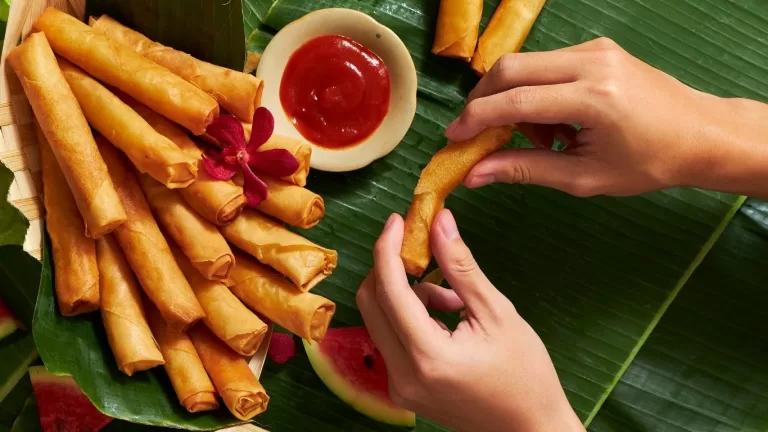
And it doesn’t stop at the front door. Filipino hosts often go above and beyond—offering the best seat, serving crowd-favorite dishes like adobo, lumpia, and lechon, and sometimes even gifting a small token of thanks. These traditions, influenced by indigenous customs and the Spanish colonial era, reflect the importance of being a gracious host and expressing gratitude as ways of life.

The Meaning and Origin of “Salamat”
At the heart of how Filipinos express gratitude is the word Salamat (pronunciation: sah-lah-maht)—simple, sincere, and deeply meaningful. In Tagalog, Salamat means “thank you,” but its roots tell a richer story.
Interestingly, Salamat comes from the Arabic word salaam, which means peace. Over time, this evolved into Salamat in the Filipino language, carrying with it not just a message of thanks—but also a beautiful wish for peace, goodwill, and harmony.
In Filipino culture, this phrase reflects our Filipino core values: community, connection, and kindness. Whether you’re thanking a neighbor for their help or showing appreciation to a friend who remembered your birthday, saying Salamat is a powerful way to express both gratitude and respect—two things we hold close to heart.
Want to go deeper? These beginner-friendly Tagalog books are great for practice anytime, anywhere:
(Note: These are affiliate links, which means I may earn a small commission at no extra cost to you if you make a purchase. Thanks for supporting my blog!)
Formal and Informal Ways to Say Thank You in Tagalog
Expressing gratitude in Filipino culture isn’t a one-size-fits-all scenario. Depending on the context and the level of respect you wish to convey, there are two basic ways to say “thank you.”
Maraming Salamat
(pronunciation: mah-rah-ming sah-lah-maht)
When you’re feeling extra grateful and want to emphasize your thanks, you can say “maraming salamat”, which translates to “thank you very much.”
If a friend goes out of their way to help you with a project, you might say, “Maraming salamat sa tulong mo!” (pronunciation: mah-rah-ming sah-lah-maht sah too-long moh) which means “Thank you very much for your help!
Another scenario might be when someone gives you a very thoughtful gift. You can say, “Maraming salamat sa regalo!” (pronunciation: mah-rah-ming sah-lah-maht sah reh-gah-loh) translated in English as “Thank you very much for the gift!”
Salamat po
(pronunciation: sah-lah-maht poh)
Adding “po” to “Salamat” makes it more formal and respectful. “Salamat po” is often used when speaking to elders, superiors, or anyone you wish to show extra respect.
If your boss treats the team to lunch, you might say, “Salamat po sa pagkain!” (pronunciation: sah-lah-maht poh sah pahg-kah-een) in English “Thank you for the food, sir/ma’am!”
In Filipino society, respect and hierarchy play significant roles. Using “po” (pronunciation: poh) and “opo” (pronunciation: oh-poh), which means “Yes, sir/ma’am”, shows that you acknowledge the other person’s status and are demonstrating your respect. This extends beyond just saying “thank you” and is an integral part of daily conversations. For instance, when you receive advice from someone older or more experienced, you can show appreciation by saying, “Salamat po sa payo ninyo!” (pronunciation: sah-lah-maht poh sah pah-yoh neen-yoh) or in English “Thank you for your advice, sir/ma’am!”
Other Ways to Say Thank You in Tagalog
While “Salamat” is the go-to word for expressing gratitude, there are several other variations that can add nuance to your appreciation. Here are some additional ways to say thank you in Tagalog:
1. Salamat sa iyo
(Pronunciation: sah-lah-maht sah ee-yoh) Meaning: “Thank you to you”
This phrase adds a personal touch by directly addressing the person you’re thanking. It’s a versatile and heartfelt way to express appreciation in everyday conversations.
For example: If someone helps you with something meaningful but straightforward, you might say, “Salamat sa iyo sa pagtulong mo.”
(Pronunciation: sah-lah-maht sah ee-yoh sah pahg-too-long moh)
In English: “Thank you for your help.”
2. Salamat nang marami sa iyo
(Pronunciation: sah-lah-maht nahng mah-rah-mee sah ee-yoh)
Meaning: “Thank you very much to you”
This phrase is a more personalized version of “Maraming salamat.” It adds warmth and direct acknowledgment to the person you’re thanking.
For example, if someone helps you carry your groceries, you might say, “Salamat nang marami sa iyo sa pagtulong mo.”
Pronunciation: sah-lah-maht nahng mah-rah-mee sah ee-yoh sah pahg-too-long moh
In English: “Thank you very much for helping me.”
3. Salamat sa lahat
(Pronunciation: sah-lah-maht sah lah-haht)
Meaning: “Thank you for everything”
This phrase is used when you want to express gratitude for multiple things someone has done. It’s perfect for situations where a person has been consistently supportive or helpful over time.
For example, if a close friend has been there for you through tough times, you might say, “Salamat sa lahat ng ginawa mo para sa akin.”
(Pronunciation: sah-lah-maht sah lah-haht nahng gee-nah-wa moh pa-rah sah ah-keen)
In English: “Thank you for everything you’ve done for me.”
4. Salamat sa tulong
Pronunciation: sah-lah-maht sah too-long)
Meaning: “Thank you for the help”
This phrase is used to express gratitude for someone’s assistance—especially when they’ve helped you solve a problem, complete a task, or offered support in a practical way.
For example, if someone helps you repair your car, you might say, “Salamat sa tulong mo sa pag-aayos ng kotse.”
Pronunciation: sah-lah-maht sah too-long moh sah pahg-ah-ah-yohs nahng kot-sheh)
In English: “Thank you for your help in fixing the car.”

5. Salamat sa pag-unawa
(Pronunciation: sah-lah-maht sah pahg-oo-nah-wah)
Meaning: “Thank you for understanding”
This phrase is used when someone has shown patience, empathy, or flexibility—especially in situations that may have caused inconvenience or delay.
For example, if you had to reschedule a meeting and the other person was accommodating, you might say, “Salamat sa pag-unawa sa aking sitwasyon.”
(Pronunciation: sah-lah-maht sah pahg-oo-nah-wah sah ah-king sit-wah-syon)
In English: “Thank you for understanding my situation.”
6. Salamat sa pag-aalaga
(Pronunciation: sah-lah-maht sah pahg-ah-ah-lah-gah)
Meaning: “Thank you for taking care”
This phrase is used to express heartfelt gratitude when someone has shown care or concern for your well-being, especially during times when you were vulnerable or unwell.
For example, if you were sick and someone looked after you, you might say, “Salamat sa pag-aalaga mo sa akin habang may sakit ako.”
(Pronunciation: sah-lah-maht sah pahg-ah-ah-lah-gah moh sah ah-kin hah-bahng my sah-keet ah-koh)
In English: “Thank you for taking care of me while I was sick.”
7. Salamat sa suporta
(Pronunciation: sah-lah-maht sah soo-por-tah)
Meaning: “Thank you for the support”
This phrase is used to express appreciation for someone’s support, encouragement, or backing—whether emotional, moral, or practical. It’s suitable for both personal and professional situations.
For example: If your team helped you through a challenging project, you might say, “Salamat sa suporta ninyo sa proyekto.”
(Pronunciation: sah-lah-maht sah soo-por-tah neen-yoh sah proh-yek-to)
In English: “Thank you for your support on my project.”
Table Guide For Ways to Say Thank You in Tagalog
| Tagalog Phrase | Meaning in English | Pronunciation | Context | Example Scenario |
|---|---|---|---|---|
| Maraming Salamat | Thank you very much | mah-rah-ming sah-lah-maht | When you are feeling extra grateful | “Maraming salamat sa tulong mo!” (Thank you very much for your help!) |
| “Maraming salamat sa regalo!” (Thank you very much for the gift!) | ||||
| “Maraming salamat po sa pagtuturo ninyo!” (Thank you very much for your teaching, sir/ma’am!) | ||||
| Salamat Po | Thank you (formal and respectful) | sah-lah-maht poh | When speaking to elders, or superiors, or showing extra respect | “Salamat po sa pagkain!” (Thank you for the food, sir/ma’am!) |
| “Salamat po sa payo ninyo!” (Thank you for your advice, sir/ma’am!) | ||||
| Salamat nang marami | Thank you very much | sah-lah-maht nahng mah-rah-mee | When someone goes out of their way to do something kind | “Salamat nang marami sa surpresa!” (Thank you very much for the surprise!) |
| Salamat sa iyo | Thank you to you | sah-lah-maht sah ee-yoh | To directly address someone | “Salamat sa iyo sa pagtulong mo.” (Thank you to you for your help.) |
| Salamat sa lahat | Thank you for everything | sah-lah-maht sah lah-haht | When you want to express gratitude for multiple things | “Salamat sa lahat ng ginawa mo para sa akin.” (Thank you for everything you’ve done for me.) |
| Salamat sa tulong | Thank you for the help | sah-lah-maht sah too-long | Specifically used to thank someone for their assistance | “Salamat sa tulong mo sa pag-aayos ng kotse.” (Thank you for your help in fixing the car.) |
| Salamat sa pag-unawa | Thank you for understanding | sah-lah-maht sah pahg-oo-nah-wah | When someone has been patient or understanding of your situation | “Salamat sa pag-unawa sa aking sitwasyon.” (Thank you for understanding my situation.) |
| Salamat sa pag-aalaga | Thank you for taking care | sah-lah-maht sah pahg-ah-ah-lah-gah | When someone has taken care of you | “Salamat sa pag-aalaga mo sa akin habang may sakit ako.” (Thank you for taking care of me while I was sick.) |
| Salamat sa suporta | Thank you for the support | sah-lah-maht sah soo-por-tah | Used to thank someone for their support | “Salamat sa suporta ninyo sa proyekto.” (Thank you for your support on the project.) |
Do you want to learn HOW TO SAY "HELLO" IN TAGALOG? Read this article!
Practical Tips for Tagalog Learners
Alright, Tagalog learners—it’s time to turn those phrases into practice! Whether you’re just starting or looking to deepen your skills, these practical tips will help you incorporate Filipino gratitude expressions like “Salamat” into everyday conversation with confidence and heart.
1. Practice Daily
Make it a habit to say “Salamat” or “Salamat po” throughout your day. Whether you’re thanking a friend, a coworker, or a stranger, the more you use these phrases, the more naturally they’ll come to you.
2. Context Matters
Be mindful of who you’re speaking to. Use “Maraming salamat” to show extra gratitude, and “Salamat po” to express respect toward elders, strangers, or those in a formal setting.
3. Learn from Locals
Engage with native Tagalog speakers when possible—whether in person or online. Listening to how they naturally express thanks will help you pick up subtle nuances, tone, and pronunciation.
4. Keep It Genuine
Filipinos value sincerity. So whether you’re saying “Salamat” or a longer phrase, let it come from the heart. A warm smile goes a long way, too.
5. Language Learning Apps
Apps like Duolingo, Rosetta Stone, and Babbel offer structured lessons in Tagalog, including pronunciation guides and cultural tips to boost your confidence as you learn.
6. Join Language Exchange Groups
Practice makes progress! Join language exchange communities on platforms like Tandem or HelloTalk, where you can connect with native Filipino speakers for real-time conversations and support.
7. Watch Filipino Media
Immerse yourself by watching Filipino movies, TV series, vlogs, or YouTube channels in Tagalog. This not only helps with comprehension but also teaches you common expressions in everyday settings.
8. Read Filipino Literature
Explore short stories, novels, and poetry by Filipino authors. Reading helps you build vocabulary and gain a deeper appreciation for the culture behind the language.
Do you want to learn ESSENTIAL TAGALOG PHRASES? Read this article!
Additional Resources for Learning Tagalog
Want to take your Tagalog learning to the next level? Whether you’re just getting started or looking to deepen your skills, here are some tried-and-tested resources to guide you on your journey:
- Books: “Elementary Tagalog: Tara, Mag-Tagalog Tayo!” by Jiedson Domigpe and Nenita Pambid Domingo. These are excellent beginner-friendly textbook. It covers essential grammar, vocabulary, pronunciation, and includes cultural insights and exercises to help reinforce your learning.
- Websites: Websites like Tagalog.com and Lingohut offer free lessons, vocabulary lists, grammar explanations, and audio recordings to help you improve pronunciation and comprehension at your own pace.
- Online Courses: Consider enrolling in online courses on platforms like Udemy or Italki.
The Beauty of Saying “Thank You” in Tagalog
Gratitude is a universal language—but in the Philippines, it takes on a deeply meaningful form. Saying “thank you” in Tagalog isn’t just about good manners—it’s about fostering connection, showing respect, and sharing the warmth of Filipino hospitality.
When you say “Salamat”, you’re not just learning a word—you’re embracing a beautiful expression of Filipino culture and heart. It’s a simple yet powerful way to bridge language and spirit, person to person.
So go ahead—sprinkle a little “Salamat” into your daily conversations. You’ll not only grow in your language journey, but you’ll also gain a deeper appreciation for the values that make the Philippines so special.
Because every new phrase you learn brings you one step closer to truly understanding the culture behind it.
Conclusion
If you enjoyed this article and want to keep learning more Tagalog words and phrases, I’d love to hear from you! 💬 Leave a comment below to share your thoughts, ask questions, or even drop your favorite Tagalog word—we’re building a community of language lovers and culture enthusiasts just like you.
Once you’ve mastered Salamat, why stop there? Keep learning with my 101 Tagalog Words & Phrases guide—it’s the perfect next step!
Maraming salamat for reading—and as always, happy learning! 🌟
For more practice, here are helpful resources:
(Note: These are affiliate links, which means I may earn a small commission at no extra cost to you if you make a purchase. Thanks for supporting my blog!